Curated cosmetic and restorative dentistry in Versova
Urgent dental assessment

Emergency Dentist in Versova

Understand the problem. Get the right next step.

Urgent dental care begins with identifying the cause and immediate risk. The first visit may provide definitive treatment or stabilize the problem before the next stage of care.
Prompt assessmentPain and infection triageTooth-preserving options
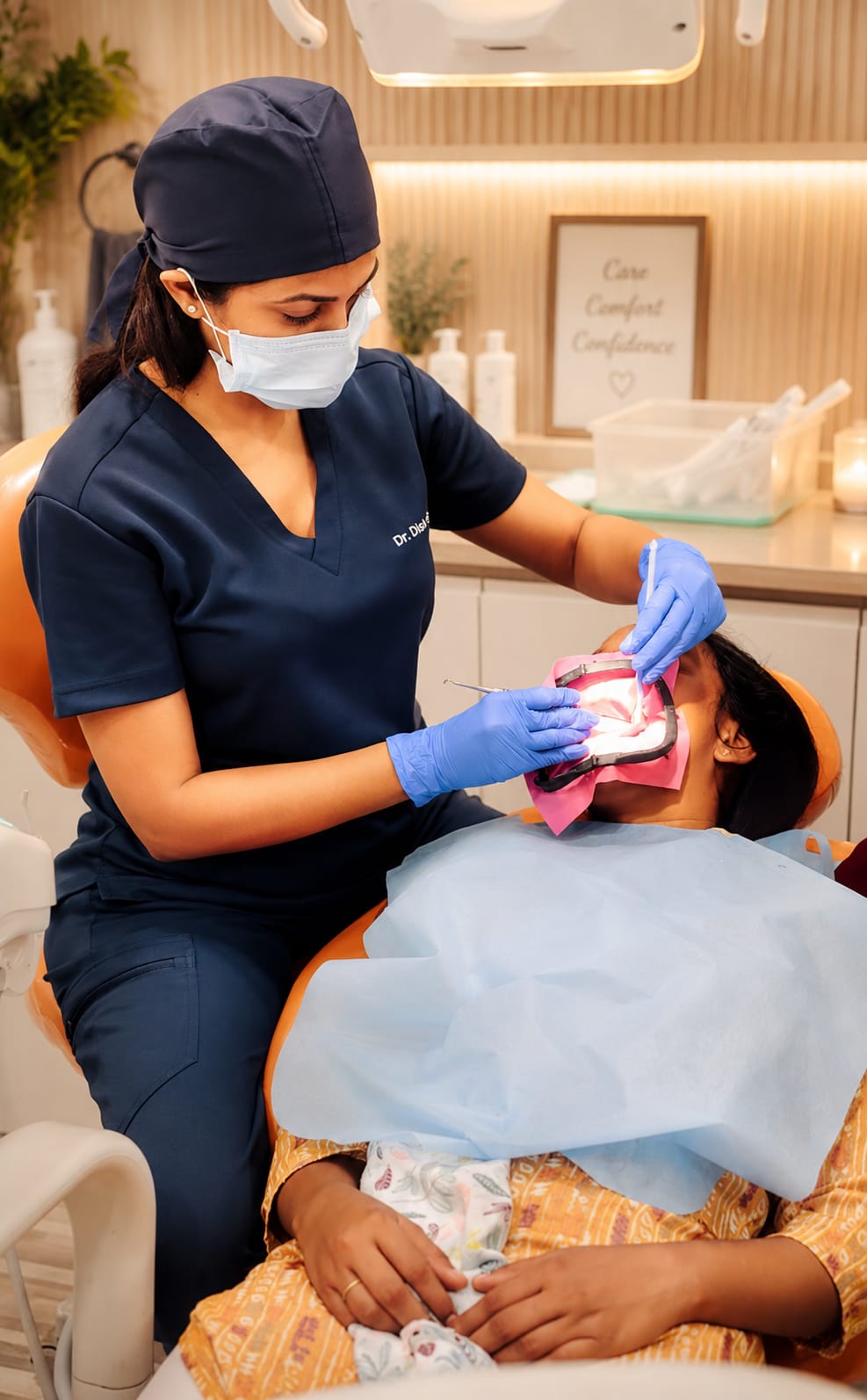
Dr. Disha Sanghvi performing a dental procedure
Diagnosis before assumption. Severe pain does not always mean extraction, and antibiotics do not replace treatment of the source.
Understanding dental emergencies

Some symptoms need faster assessment.

Dental emergencies range from severe pain and swelling to trauma, bleeding, or a broken tooth. The appropriate response depends on the cause, severity, and signs of spread.

02

Swelling or infection

Swelling can indicate infection and should be assessed promptly, especially if it is spreading or accompanied by fever or illness.

03

Broken or knocked tooth

Trauma can damage enamel, dentine, the nerve, root, supporting bone, or soft tissues. Early evaluation can affect the treatment options.

04

What urgent care may do

Care may include diagnosis, pain relief, drainage, temporary protection, root canal treatment, extraction, trauma stabilization, or referral when appropriate.

When to call

Do not wait for severe symptoms to become unmanageable.

Call the clinic when pain, swelling, trauma, or bleeding is significant, worsening, or disrupting sleep and normal activity.

  • Severe toothache or throbbing pain
  • Swelling or active dental infection
  • Broken tooth or dental trauma
  • Urgent extraction need
What happens at the visit

Relief and definitive treatment are not always the same step.

The aim is to reduce immediate risk and explain what will resolve the source.

Preserve when possible

Treat and protect the tooth

Depending on the diagnosis, a tooth may be stabilized or treated with a filling, root canal, splint, crown plan, or another restorative approach.

  • Cause-based pain relief
  • Root canal assessment
  • Trauma or fracture stabilization
Remove when necessary

Extraction or surgical care

Removal may be recommended when the tooth cannot be predictably restored, infection cannot be controlled otherwise, or the risks of retaining it are too high.

  • Prognosis explained first
  • Comfort and aftercare planning
  • Replacement options discussed later

Antibiotics are used only when clinically indicated. They may help manage spreading infection or systemic involvement, but they do not repair a broken tooth or remove infection from inside a tooth.

How treatment is planned

Triage, diagnose, stabilise, and plan.

Emergency dental care helps patients get urgent assessment and relief for pain, swelling, trauma, or infection. At InstaSmiles Dental, the first goal is to stabilize the issue and identify the safest next step.

01

Urgent assessment

Symptoms and visible findings are reviewed to identify immediate risks.

02

Pain and infection management

Relief measures and stabilization are prioritized first.

03

Definitive planning

The tooth may need root canal treatment, extraction, or restorative care.

04

Follow-up care

Patients are guided on medication, review timing, and next steps.

Dr. Disha Sanghvi at InstaSmiles Dental
Your treating dentist

Clear options, conservative recommendations.

Dr. Disha Sanghvi, B.D.S. (MUM), Gold Medalist, begins with diagnosis and a discussion of what you want to improve. Treatment is recommended only after the health of the teeth, gums, bite, and long-term maintenance needs are considered.

Dr. Disha SanghviB.D.S. (MUM)Gold MedalistVersova, Andheri West

This page provides general patient information and does not replace an examination, diagnosis, or individual treatment advice.

After urgent treatment

Follow-up completes the job.

Fast evaluation helps reduce pain, prevent complications, and guide whether the next step should be medication, root canal treatment, extraction, or further restorative care.

Temporary fillings, medication, drainage, trauma stabilization, or pain relief often require a scheduled review and definitive treatment. Return sooner if symptoms worsen.

Need help with emergency dental care?

Book a consultation with InstaSmiles Dental to discuss whether emergency dental care is the right treatment pathway for you.

Frequently asked questions

When should I see an emergency dentist?
You should seek urgent dental evaluation if you have severe pain, swelling, trauma, uncontrolled bleeding, or symptoms that are rapidly worsening.
Will an emergency appointment always lead to extraction?
Not always. Emergency care is about diagnosis and stabilization first. In some cases the tooth can be treated with root canal therapy or restorative care instead of extraction.
Can swelling from a tooth infection be serious?
Yes. Swelling can indicate spreading infection, so it should be assessed promptly rather than managed only with home remedies.
What should I do if a permanent tooth is knocked out?
Handle it by the crown, not the root. If dirty, rinse it gently without scrubbing, try to place it back in position if safe, or keep it in milk, and seek urgent dental care immediately. Time matters.
Can I wait for dental swelling to go down on its own?
Swelling can indicate infection and should be assessed promptly. Rapid spread, fever, difficulty swallowing or breathing, or significant facial swelling requires immediate emergency medical attention.
What can I take for tooth pain before the appointment?
Use only pain medicine that is normally safe for you and follow the label or advice from a qualified clinician. Do not place aspirin on the tooth or gum, and do not delay assessment if symptoms are severe or worsening.
Request an appointment

Tell us how we can help.

Share your details and we will prepare a WhatsApp enquiry for the InstaSmiles team.

Continuing opens WhatsApp with your enquiry ready to review. Nothing is sent until you press send in WhatsApp.